

JHBIC Collaboration Spotlight | LN Robotics
For this feature, we are pleased to introduce LN Robotics, a medical robotics company developing robotic platforms for vascular interventional procedures.
Through a brief interview with LN Robotics, we were able to get an insight into the company’s technology, its vision for the future of medical robotics, and its collaborative research with Johns Hopkins University, made possible through the help of JHBIC.

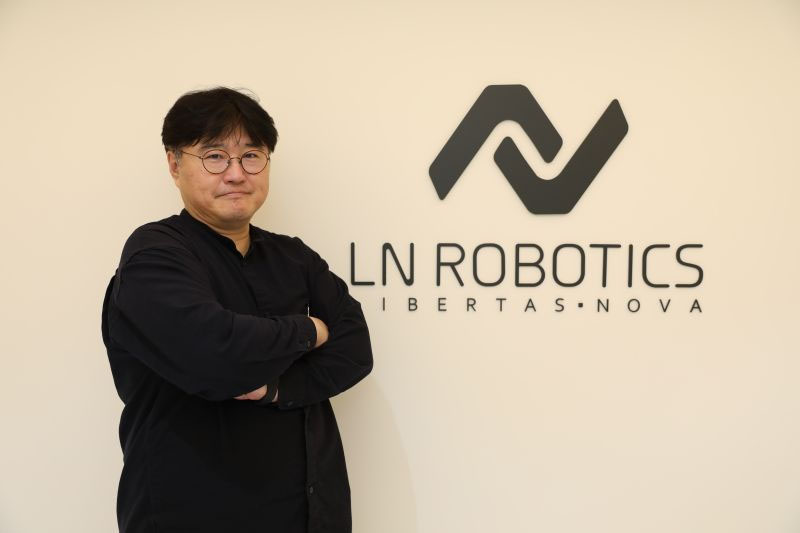

Interview with LN Robotics
Q1. Could you briefly introduce LN Robotics and your main area of focus?
LN Robotics is a medical robotics company developing robotic platforms for vascular interventional procedures, with a focus on supporting physicians and patients in the cardiovascular intervention field.
The company developed and commercialized AVIAR, Korea’s first robotic assistance platform for cardiovascular intervention. LN Robotics is currently focusing on next-generation vascular interventional robotic platforms that integrate AI-based image analysis with precision robotic control. In particular, the company is advancing technologies such as real-time surgical instrument tracking, AI-based navigation, remote procedure support, and autonomous intervention capabilities, with the goal of building a platform that can expand beyond cardiovascular procedures into angiography, peripheral vascular interventions, and neurovascular interventions in the future.
Q2. Which technology or research initiative would you like to showcase in this Collaboration Spotlight?
LN Robotics would like to highlight its AI-based precision robotic platform for vascular intervention, which is being developed through collaborative research under the GITCC Program.
In collaboration with researchers at Johns Hopkins University, the project focuses on technologies such as AI-based vessel segmentation, 3D-2D image registration, real-time vessel and surgical instrument tracking, and autonomous navigation.
Q3. What challenges does this technology aim to address?
Neurovascular procedures involve highly complex and delicate vessel structures, making them technically challenging and requiring specialized clinical skills and equipment.
By combining AI, medical imaging, and robotics, LN Robotics aims to improve procedural accuracy, reduce radiation exposure for both physicians and patients, and support the future development of remote, semi-autonomous, and autonomous interventional procedures. Through this research, LN Robotics expects to enable higher-quality cerebrovascular treatment even in regions with limited access to advanced medical care.
Q4. How has participation in JHBIC/GITCC supported LN Robotics?
Participation in JHBIC and GITCC has been highly beneficial in helping LN Robotics validate and advance its medical robotics technologies from a global perspective.
In particular, interactions with world-renowned research institutions such as Hopkins and medical experts have provided valuable insights not only into the technical maturity of our technology, but also into the clinical applicability of our technological developments, market entry strategies, and approaches to global regulatory requirements. These experiences are expected to serve as an important foundation for future FDA approval efforts, global clinical research, and collaborations with overseas medical institutions, while also supporting the development of strategies to strengthen the company’s global commercialization potential.
Q5. What role does JHBIC and the GITCC Program play in advancing the future of medical robotics through global collaboration?
LN Robotics believes that the future of medical robotics is not only about developing machines, but also about building a global collaborative ecosystem where AI, medical imaging, robotics, and clinical expertise come together.
JHBIC/GITCC serves as an important platform for turning this type of collaboration into reality, helping companies develop safer and more precise medical technologies for patients around the world.
We thank Dr.Jaesoon Choi of LN Robotics for his time and insight into his research and collaboration with JHBIC and GITCC.
Please follow the JHBIC LinkedIn page to stay updated on future Collaboration Spotlight features and upcoming news.